Not a contractor. Lead referral platform covering Portland's 10 deepest cost markets.
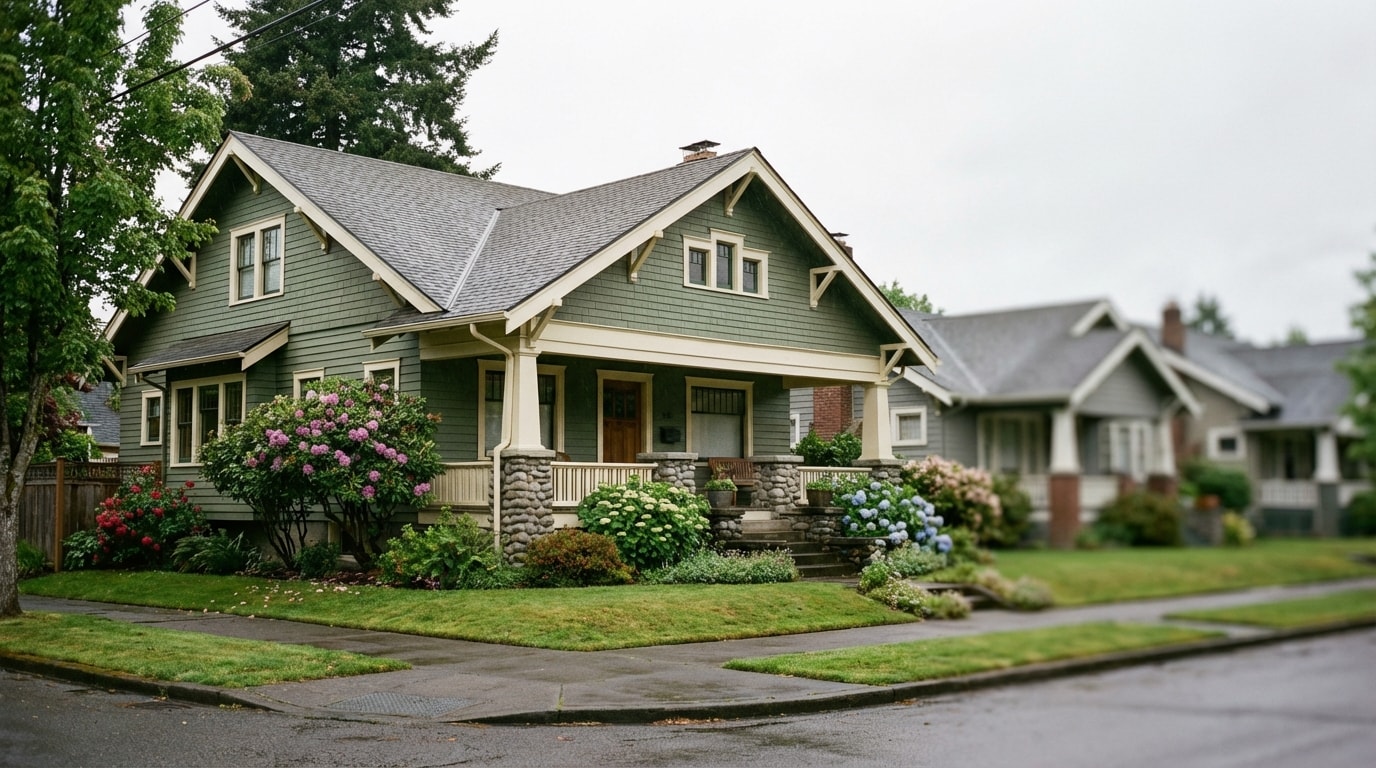
WHAT ROOFING ACTUALLY COSTS IN BEAVERTON
Beaverton's $11,400 average reflects a market with three distinct tiers of housing stock that re-roof at meaningfully different price points. The 1955–1970 Cedar Hills, Garden Home, and inner ranch stock re-roofs at $8,500–$11,000 with architectural asphalt, single-story, modest pitch, but frequently with deck and ventilation issues from age. The 1985–2005 mid-tier builds in Murrayhill, West Slope, and the Sunset corridor re-roof at $11,000–$14,000, sound construction, complex rooflines, modern ventilation. The premium Bethany overlap, upper West Slope, and Nike-area homes re-roof at $14,000–$22,000 with premium asphalt or metal.
Cedar Mill and inner Cedar Hills are the cost-driver story for the older Beaverton stock. The 1950s–1960s ranches in this corridor were built with 1×6 plank decking that has aged inconsistently, some sound, some decayed beyond surface inspection. Per-sheet decking replacement averages $90–$130 installed, and homeowners commonly see 4–10 sheets needed after tear-off. Pre-bid contracts should specify the per-sheet rate so the worst case is known before signing.
The Highway 26 corridor concentrates contractor density. Beaverton has roughly 30 active CCB-licensed residential roofing contractors competing for the same market vs. roughly 12 in any single Portland Inner SE neighborhood, a 2.5x density. Practical impact: bid spreads on identical scope are tighter, three-bid comparisons are reliable, and emergency leak service is typically same-day during peak rain season. The trade-off is that fly-by-night operators are more numerous in a dense market, CCB verification matters more here than in markets with fewer total contractors.
Washington County permit process is rigorous. Pre-1990 Beaverton homes face active ventilation review at final inspection, and the older Cedar Hills/Garden Home ranch stock frequently requires upgrades. The build-wave Murrayhill and West Slope homes uniformly meet the 1:300 standard and rarely see issues. Permit fees run $280–$420, modestly higher than Multnomah County. Beaverton serves as the regional anchor for the absorbed catchment of Hillsboro, Tigard, Tualatin, Sherwood, and Wilsonville, same crews work all five.
BEAVERTON COST DRIVERS
The factors that move Beaverton roofing quotes most, with quantified impact and the explanation behind each. Use these to evaluate whether a contractor's bid reflects local conditions or is missing something.
Cedar Hills, inner Cedar Mill, and Garden Home ranches frequently need 4–10 sheets of replacement decking after tear-off. Per-sheet rate must be specified in writing.
Washington County actively enforces 1:300 balanced ratio. Older Beaverton ranches frequently have only gable-end vents inadequate to current standard.
Murrayhill and West Slope subdivisions feature multiple gables and hip intersections. Material consumption and labor both higher than ranch geometry.
Higher-tier Beaverton subdivisions see 50-year designer shingle and standing seam metal uptake well above the Oregon average.
Material and color provisions in CC&Rs require submission and approval before permit issuance. Standard products usually clear quickly; metal and unusual colors take longer.
Beaverton crews work the entire west metro. Absorbed suburbs see identical labor rates and material pricing, service area not a quality or cost differentiator.
BEAVERTON REPLACEMENT BREAKDOWNS
Three representative Beaverton replacement projects with line-item breakdowns drawn from typical local housing stock. Use these to anchor what your own quote should look like.
| Tear-off and disposal | $1,300 |
| Plank deck spot repair (6 sheets) | $780 |
| Synthetic underlayment + ice-and-water at eaves | $540 |
| Architectural shingles, Owens Corning Duration | $4,800 |
| Ridge vent + 4 new soffit vents | $780 |
| Pipe boots, step flashing, drip edge | $420 |
| Permit + Washington County inspection | $320 |
| Cleanup and disposal | $340 |
| Total | $9,280 |
Note: Lower-end Beaverton replacement on the older ranch stock. Plank deck repair and ventilation upgrade are typical for this vintage, together they add roughly $1,500 over a build-wave equivalent.
| Tear-off and disposal | $2,200 |
| Synthetic underlayment + ice-and-water at valleys | $680 |
| Premium architectural, GAF Timberline UHDZ | $7,200 |
| Specialty trim at multiple gables and hips | $1,200 |
| Ridge cap + ridge vent | $580 |
| Pipe boots and skylight curb reseal | $540 |
| HOA submittal preparation | $180 |
| Permit + Washington County inspection | $340 |
| Cleanup and disposal | $420 |
| Total | $13,340 |
Note: Mid-tier build-wave home with premium shingle upgrade. The 50-year UHDZ is a $1,500 premium over base architectural and is well-justified for a long-term hold.
| Tear-off original architectural | $3,000 |
| Synthetic high-temp underlayment | $1,100 |
| 24-gauge standing seam panels (charcoal) | $17,200 |
| Specialty ridge, hip, valley, gable trim | $2,800 |
| Snow guard system above entry and walkway | $1,400 |
| HOA design review submittal and approval | $280 |
| Permit + Washington County inspection | $420 |
| Cleanup and disposal | $520 |
| Total | $26,720 |
Note: Premium upper-end Beaverton replacement. The metal premium of roughly $14,000 over premium architectural reflects 50+ year roof life vs. 30, buyers in this tier are running lifecycle economics, not upfront cost comparisons.
PERMITTING IN BEAVERTON
Washington County permits run 5–8 business days. Inspections thorough; Cedar Hills and inner ranch stock often require ventilation upgrades.
- ▸1:300 balanced ventilation actively enforced on pre-1990 homes
- ▸Cedar Hills and Garden Home plank deck stock often requires per-sheet repair budget
- ▸HOA design review required in Bethany overlap, Murrayhill premium sections, upper West Slope
- ▸Hillsboro, Tigard, Sherwood, Wilsonville absorbed catchment, same Washington County permit process applies
BEAVERTON AT A GLANCE
- ▸Inner west metro corridor, 50,000+ owner-occupied homes within 7 miles of Nike HQ
- ▸Highest contractor density in the Portland orbit, competitive bidding
- ▸Mix of 1950s ranches, 1970s splits, and 1990s+ premium builds creates broad pricing range
ROOFING SERVICES IN BEAVERTON
All five services covered by the same Beaverton crews. Local cost intelligence on this page applies to every service type, material choice shifts the absolute number, but the Beaverton-specific drivers (deck, canopy, permit, design review) apply across the board.
BEAVERTON CATCHMENT
Our Beaverton crews also cover these adjacent neighborhoods and surrounding communities. Same pricing, same CCB-licensed work, same local permit knowledge.
- Cedar Mill
- Cedar Hills
- Garden Home-Whitford
- Raleigh Hills
- West Slope
- Bethany
- Murrayhill
- Sunset corridor
- Hillsboro
- Tigard
- Tualatin
- Sherwood
- Wilsonville
- King City
- Durham
- Metzger
- Aloha
- Cornelius
- Forest Grove
BEAVERTON ROOFING QUESTIONS
How much does a roof replacement cost in Beaverton?
The average replacement in Beaverton (97005) costs $11,400, typically ranging $8.5k–$17k. Most common material: Architectural Asphalt.
How difficult is it to get a roofing permit in Beaverton?
Beaverton has a permit difficulty score of 4/5 (Complex). Washington County permits run 5–8 business days. Inspections thorough; Cedar Hills and inner ranch stock often require ventilation upgrades.
What roofing contractors serve Beaverton?
Multiple licensed Oregon CCB contractors operate in Beaverton. Our platform vets all contractors against a 47-point checklist. Use our free quote form to get matched within 48 hours.
Why does Beaverton have more contractors than other Portland suburbs?
The Highway 26 corridor concentrates the inner west metro and Silicon Forest demand into a relatively compact area. Beaverton's roughly 30 active CCB-licensed residential roofers compete for jobs across Beaverton, Hillsboro, Tigard, Tualatin, Sherwood, and Wilsonville, but most are based in or near Beaverton itself. The density means three-bid comparisons are reliable on standard scope. The trade-off is that fly-by-night operators are more numerous in a dense market, CCB licensing verification matters more here.
Should I expect deck repair on my Cedar Hills ranch?
Probably yes. The 1950s–1960s ranches in Cedar Hills and inner Cedar Mill were built with 1×6 plank decking that has aged inconsistently. Per-sheet decking replacement averages $90–$130 installed, and 4–10 sheets after tear-off is common. Get the per-sheet rate in writing in your contract before signing, quotes that don't include it are setting you up for change orders.
Is HOA approval required for my Murrayhill or Bethany re-roof?
Usually yes for Murrayhill and Bethany overlap, plus most premium West Slope subdivisions. CC&Rs include material and color provisions that require formal submittal and approval before Washington County will issue the permit. Standard architectural asphalt in current popular colors typically clears review in 1–2 weeks; metal roofing and unusual color choices commonly take 3–4 weeks. Build the timeline into your project planning.
Do you serve Hillsboro / Tigard / Tualatin / Sherwood / Wilsonville from Beaverton?
Yes, all five suburbs are part of the absorbed Beaverton catchment. Same crews, same Washington County permit process (or Clackamas for Wilsonville), same labor rates and material pricing. Hillsboro Silicon Forest builds, Tigard Bull Mountain homes, Tualatin family subdivisions, Sherwood new construction, and Wilsonville Charbonneau projects are all routine work for the established Beaverton-based contractor pool.
Is metal worth the premium on a 2,500 sq ft Beaverton subdivision home?
For homeowners staying 15+ years, yes. The $5,000–$9,000 metal premium over premium architectural pays back through avoided maintenance and one-and-a-half avoided replacement cycles over a 50-year hold. For homeowners selling within 7 years, metal recovers maybe 40–60% of its premium in resale value, premium architectural is the more rational call. Solar plans tip the math toward metal regardless of hold time, since clamp mounting on standing seam eliminates the rail-and-bracket penetrations required for asphalt.